
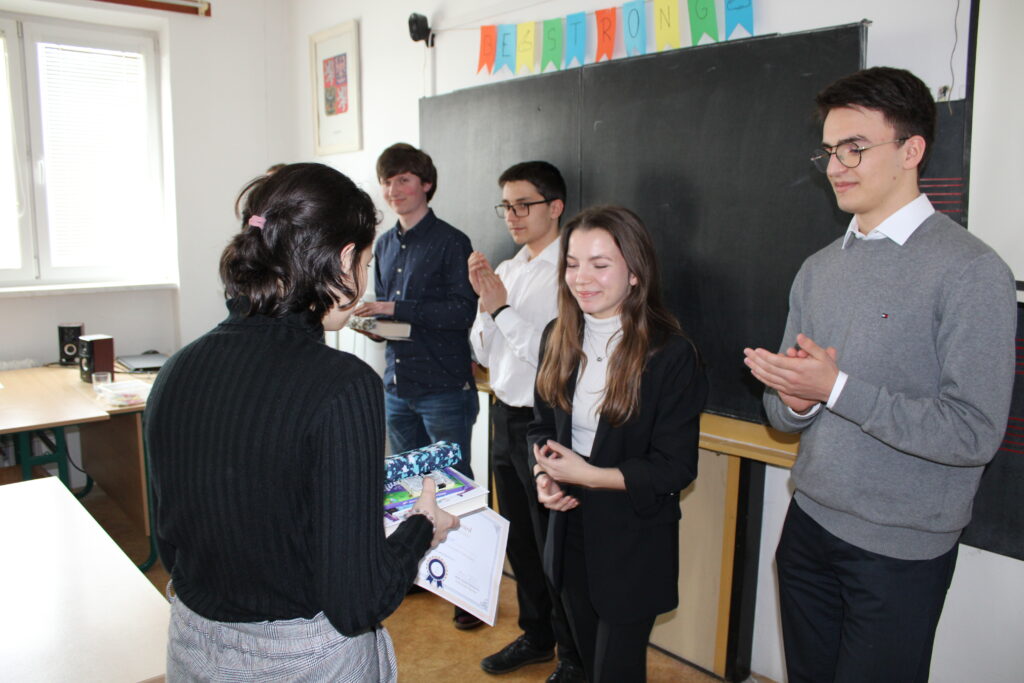
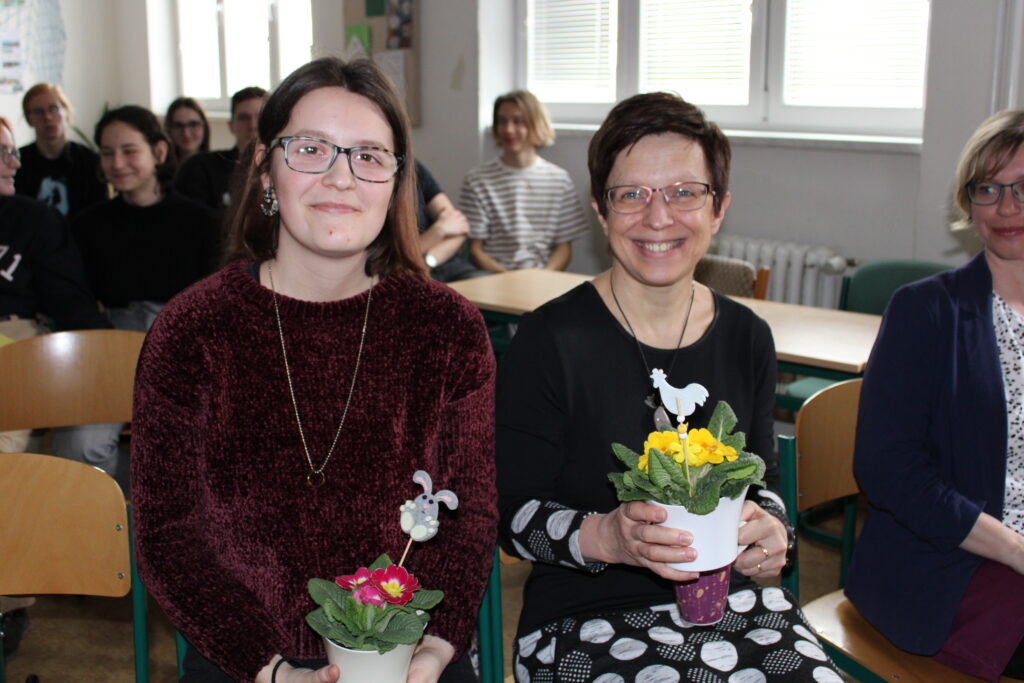
I letos se na Wichterlově gymnáziu uskutečnila Studentská vědecká konference. Studenti tak opět dostali možnost ukázat svou schopnost prezentovat, a to navíc v angličtině. Setkali jsme se s různorodými zájmy žáků, každá prezentace byla něčím obohacující. Nezklamalo ani zahájení celé konference. Přivítala nás tradičně Mgr. Renata Tomášková. Společně s ní přišla na zahájení studentka Ostravské univerzity, Kristýna Trnčáková. Ta nám prezentovala o původu a rozboru jazyků, jež jsou použity v knihách Pán prstenů od J. R. R. Tolkiena, a také, jak není vůbec jednoduché tyto jazyky přeložit například do jazyka českého. Nečekaně plynule na téma překladatelství navázal Tomáš Hojgr se svou prezentací The Sorrows of a Young Translator.
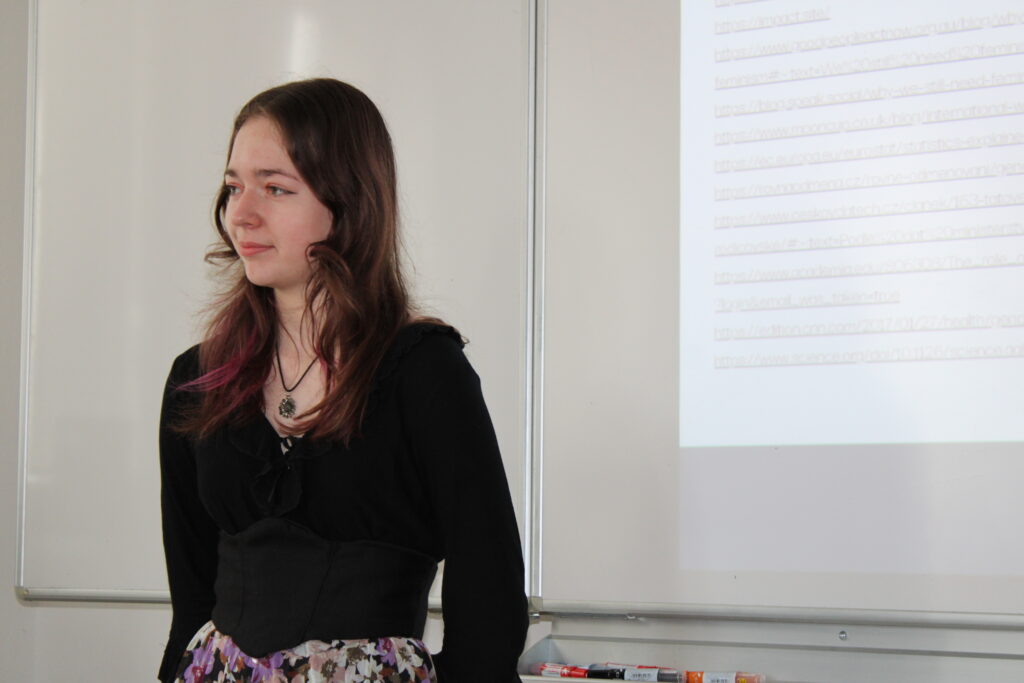
Je jasné, že na konci celé soutěže byli vítězové a poražení. A já patřím mezi ty, kteří to zkusili a nepostoupili nikam. Ovšem účelem není vyhrát, ale zúčastnit se a získat nové zkušenosti. Taky bych se ráda podělila s vámi, čtenáři Glossaria, o své téma. Jedná se o krajně kontroverzní téma, ale zároveň o problematiku, která zde mezi námi přetrvává.
Why we still need feminism
First let me make clear differences between these terms: feminism, misogyny and misandry. Misogyny is about hatred of or prejudice against women. It is a form of sexism which is used to keep women in a lower social status than men. Its antipole is called misandry. Misandry is about hatred of or prejudice against men. And right in the middle, there’s feminism. That means all genders have equal rights and opportunities.
Brief history of feminism
In the past, before feminism, women weren’t equal to men. Misogyny has been widely practiced throughout history for a very long time. It’s reflected in art, literature, historical events and religions worldwide. Mary Wolstonecraft is seen as a founder of feminism due to her book from 1792 in which she wrote about discrimination against women. But the movement itself started about 100 years later at the end of the 19th century in the UK and US. It spread around the world and came in three waves. Thanks to this, the equality between men and women definitely got better. Women can vote and study. Women have better employment opportunities. But we still have quite a long distance to go before every woman in the world will feel equal to the men beside them. According to a study by Impact, it’ll take about 300 years to achieve absolute equality.
Now let’s cover some particular examples of the need for feminism.
Gender pay gap
Gender pay gap is defined as a percentage difference between the average hourly earnings of employed men and women. Within the European Union in the Czech Republic, the gender pay gap in 2020 was 16,4 %. The average in the European Union was about 13 %. A survey by a law firm (Slater and Gordon) shows that if we take 500 managers and let them choose between a man and a woman of the same age and qualifications, then a third of these managers would rather employ the man over the woman for fear of maternity leave.
Parental leave
In our country, not only women have a right to go on maternity leave, also men can take paternity leave and afterwards also go on parental leave. And due to a survey, most of the men would like to stay at home with their children. But in reality it doesn’t really work, at least in the Czech republic: only 3,5 % has experience with parental leave and 13,6 % has experience with paternity leave. Men say that the biggest obstacle is money. They’re afraid that it wouldn’t be enough to cover household expenses also, surprise, because of the partner’s salary. Some of the men think that childcare is a woman’s traditional mission.
Expectations and stereotypes
Women carry the burden of domestic duties and parental demands. They are too often expected to go to work, look after kids, clean the house till it sparkles and still have food ready on the table for their husbands and kids.
Gender stereotypes are also another problem. They can strongly influence the lives of men and women. For example, stereotypes about women’s performance actually impact how well they do on exams. In a study by a website called Academia, participants were told that a math test has significant gender differences and females performed worse than their male peers. Whereas women who were told there was no difference scored the same as men. This is called ‘Stereotype threat’ and it contributes to long-term differences in educational achievement between men and women.
Another experiment by the University in Illinois shows that girls pick up on gender biases at their early age. 6-year-old girls and boys were told a story about a person who is really, really smart. Then they were asked who they think the protagonist is. Both girls and boys picked a male character. In a similar experiment, boys and girls of the age of six were asked if they wanted to play a game which was for people who are really, really smart. The boys wanted to play the game but the girls had decided that the game wasn’t for them. It’s clear to see how growing up with these biases can shape women’s life as an adult too. It may also be a contributing factor to the lack of opportunities for women to work in science, technology, engineering and mathematics fields.
Lack of leadership opportunities
And I would conclude it with the fact that there are not enough leadership opportunities for women which is a great demonstration of misogyny. Because if women do manage to achieve leadership positions, they are quickly stifled by the culture of misogyny. You can notice it in the news. For example, when there’s an article about a woman who is in a high position, most of the time they comment on her appearance more than on her achievements. Even when sitting as Prime minister of Australia, Julia Gillard still was a victim of cruel words of misogyny from the Leader of the opposition, Tony Abbott. When talking about men having more power than women, he dared to ask a question: is that a bad thing?
At the end of the day, we would find many other reasons why we still need feminism, these were just examples. I hope I somehow informed you more about these problems.